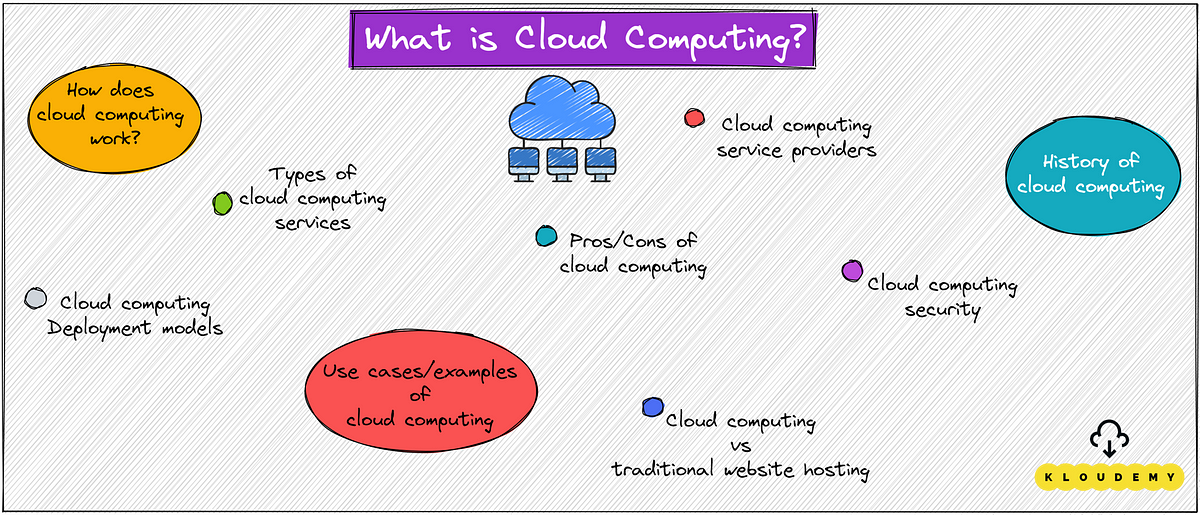
Sometimes it's a good idea to take a step back and get a simple definition of something as complex as cloud computing before moving forward. This article provides exactly that and breaks down the many factors surrounding cloud computing.
Cloud computing refers to the delivery of various IT services, such as computing power, storage, and databases, over the internet. Instead of relying on local servers or personal computers, users can access shared resources hosted remotely. This model allows businesses to utilize services like email (e.g., Gmail, Outlook) without needing to understand the underlying infrastructure or maintenance.
What are the different Cloud Service Models?
The primary cloud service models are Infrastructure-as-a-Service (IaaS), Platform-as-a-Service (PaaS), and Software-as-a-Service (SaaS). IaaS provides scalable infrastructure resources, PaaS offers a framework for developing applications, and SaaS delivers software applications over the internet. Each model serves different business needs, allowing for varying levels of control and management.
What are the advantages of Cloud Computing?
Cloud computing provides several advantages, including agility, as it allows businesses to quickly access a wide range of services; elasticity, enabling them to scale resources based on demand; and cost savings, as organizations only pay for what they use. Additionally, cloud solutions facilitate global deployment, allowing businesses to reach new markets efficiently.




 Sign in with LinkedIn